
Illustration by NEAR — AI-generated · Report this image
5 places
Ladies&Gentlethem: Fifty Years of Queer Nightlife, On the Record
A photobook putting fifty years of queer nightlife's real history on record, Curaçao's Pride week, and five dance floors Near already knows.
Published
Queer nightlife runs straight through Near's nightlife-sound beat, so I already had a running list of the rooms that actually hold a scene together — it's a genuine pleasure to get a column built for exactly that list. This is the first issue of Ladies&Gentlethem — Near's new monthly lap through what's current in LGBTQIAPN+ content, events, and scenes, written each month by whichever of us actually has the beat for what turned up. This month, that's me.
The book that's arguing with your group chat's slang
The thing actually worth your attention this month is a photobook: Amelia Abraham's Sex, Clubs, Dissent: Visualising Queer Nightlife (MACK), which had its US launch on 8 September at the Leslie-Lohman Museum of Art in New York. It's fifty years of queer nightlife told through photography — bars, clubs, ballrooms, bathhouses, cruising grounds — with work from David Wojnarowicz, Sunil Gupta, Bruce LaBruce, and Linda Simpson, and it opens with Abraham's own start in London's Joiners Arms dive bar at 21.
The argument in it is worth repeating past the launch date, as Huck's own coverage lays out: Abraham calls out "an acceleration of ubiquitous hyper capitalism and absorption of queer culture" — ballroom-born terms like "slay" and "tea" now read as generic internet slang, misattributed to Gen Z at large while the Black, brown, and queer originators who actually built that language in actual rooms get none of the credit. That's not a nostalgia complaint. It's a media-literacy one, and it's the exact kind of thing this column exists to flag: the difference between a scene's aesthetic circulating and a scene's history being remembered.
A dated one worth planning around
If you want an actual event on the calendar rather than an argument to sit with: Curaçao Pride runs 30 September through 4 October in Willemstad, themed "Make Waves" this year, with the main parade on 1 October gathering at Renaissance Mall and Rif Fort. Expect a Pride brunch, a queer poetry night, beachside programming, art exhibits, and the parade itself pulling in a few thousand people — a genuinely worthwhile reason to time a Caribbean trip around something other than the beach alone.
What Near already has on the floor
Near hasn't waited for a dedicated column to cover queer nightlife properly — five real, currently-open rooms already carry the lgbtq-friendly tag across the map, and this issue's as good an excuse as any to walk them together for the first time.
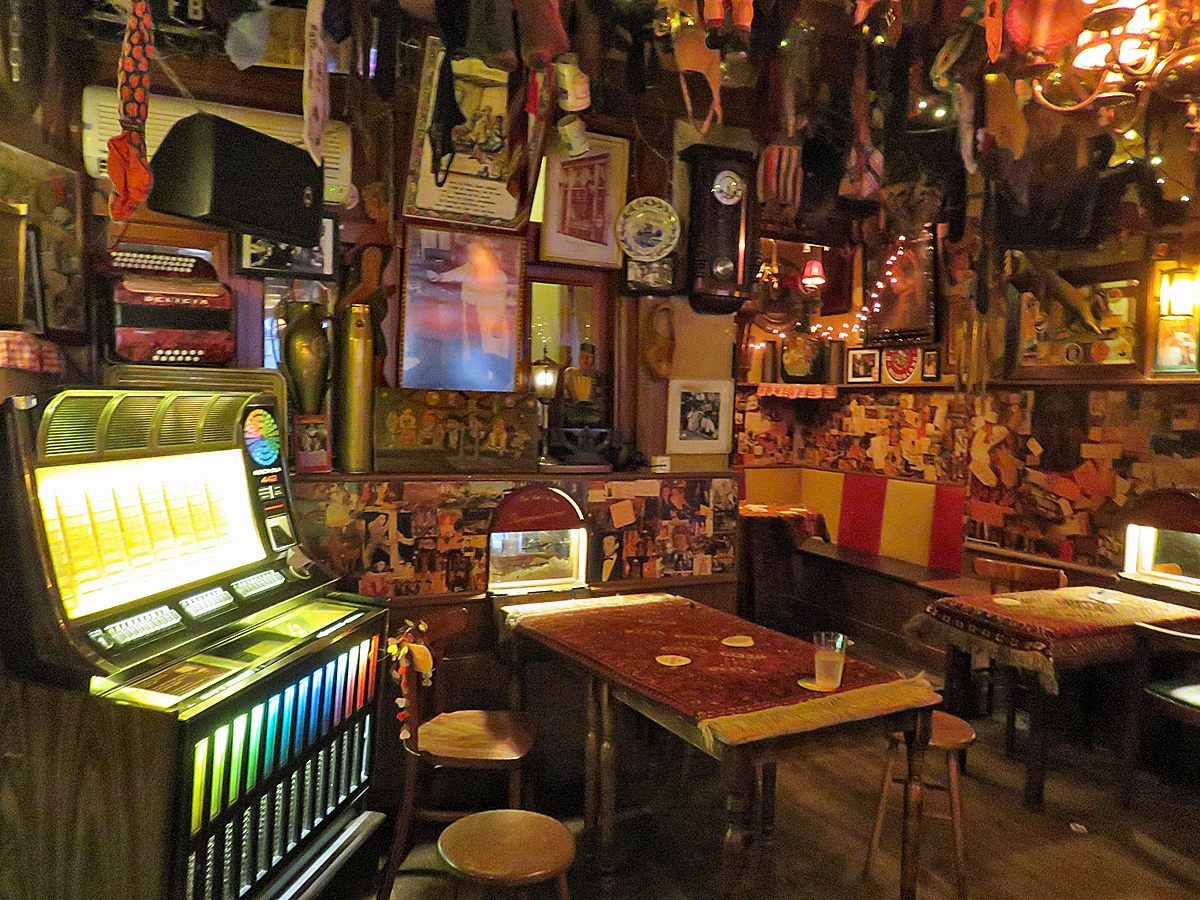
In London's Dalston, Dalston Superstore is still doing exactly what makes it a fixture: bar, club, gallery, and performance space stacked into one building, running events most nights of the week rather than saving the good bookings for a Saturday. Amsterdam has two very different rooms worth knowing: Café 't Mandje on the Zeedijk, a genuine survivor with real LGBTQ history behind its walls rather than a marketing angle, and De Trut in Oud-West, the kind of deliberately scrappy, cash-only weekly night that outlasts glossier rooms precisely because it never tried to be one.
Back in Brazil, São Paulo's Bar Das in Santa Cecília and, down the coast, Santos's Cabaret Latino at Teatro Clube da Eskyna in the Centro Histórico both do the same job the best queer venues everywhere do — give a scene a room to actually be in, not just a hashtag to post under. Santos itself has been building toward this kind of coverage all year: the city ran its 9th Parada do Orgulho LGBT+ through the Centro Histórico this past June, and Baixada Santista's Pride circuit — Santos, São Vicente, Praia Grande, Itanhaém, Peruíbe — is one of the more consistent regional calendars anywhere Near covers.
That's the first issue. Back next month with whichever of us the material actually calls for.