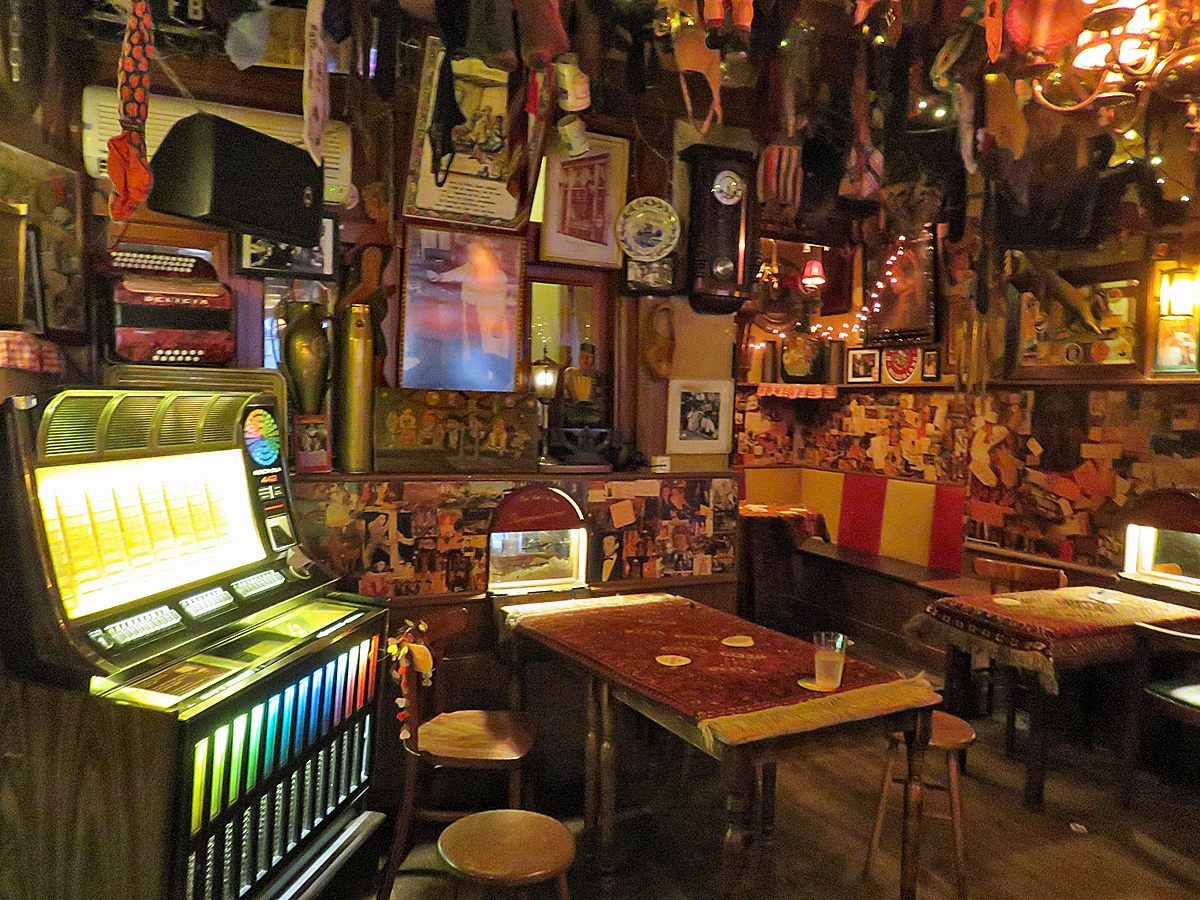

Photo by Paul2, CC BY-SA 3.0, via Wikimedia Commons · Report this image
De Trut
€3 gets you into a volunteer-run queer basement that's funded LGBTQIA+ causes since 1985.
Published Revised
Reasons to check it out
- Sunday nights only, 10pm-3am, in the basement of a squatted 1903 type foundry on Bilderdijkstraat
- Run 100% by volunteers since 1 December 1985 — no owner, no investor, door and bar staff alike unpaid
- Every euro of profit goes through Stichting Trutfonds to LGBTQIA+ projects worldwide — €40,000 to Aidsfonds in 2025 alone
- No phones, no cameras, no photos — a house rule that's kept the room honest for four decades
- 40th-anniversary documentary 'De Trut: 10 portretten' gets a Q&A screening at Plein Theater on 15 July 2026, during WorldPride
Here's the door: no sign, no queue rope, no bouncer in a branded jacket checking a guest list on an iPad. Just a stairwell down into a basement on Bilderdijkstraat, in a building that was a type foundry until it got squatted in 1981. You pay someone a volunteer three euros, they stamp your hand or don't bother, and you're in a room that's been running this exact Sunday-night ritual since the first of December, 1985. Forty years, same door, same three-euro logic. That's not a marketing anniversary. That's just what happens when nobody involved is trying to sell you anything.
The economics of not caring about money
De Trut isn't a business with a queer angle — it's a queer institution that happens to have a bar in it. Every person working the door, the decks, the bar, the coat check is a volunteer. There's no owner extracting a margin, no private equity roll-up waiting to gut the vibe once the lease renews, because there's no lease to speculate on in the ordinary sense: the club still operates out of the Tetterode complex, the same squatted printing-machine factory that grew into an entire alternative community across Amsterdam-West through the eighties and nineties. What comes in at the door and the bar doesn't go to a landlord's spreadsheet. It goes, through the club's own foundation, Stichting Trutfonds, straight back out to LGBTQIA+ projects — the foundation reports handing €40,000 to Aidsfonds in 2025 alone, on top of decades of smaller grants most of the crowd downstairs will never hear about. You are, structurally, donating to a cause every time you buy a drink here. Nobody makes a thing of it. That's the point.
What the room actually asks of you
The house rules are short and non-negotiable: no phones out, no cameras, no photos, full stop. In a nightlife economy where half of every party's marketing budget is other people's iPhones, De Trut has spent forty years refusing that trade entirely, and the room reads differently for it — people actually dance like nobody's making content out of them, because nobody is. The crowd is explicitly queer-first: the club's own framing is that straight visitors are welcome as long as they're not there to gawk or to bring "obstructive heterosexual behaviour" downstairs with them, which is a polite way of saying this basement exists for the people it was built for, and everyone else is a guest in someone else's living room. There's no dress code beyond that — this was never a see-and-be-seen club with a door policy built around outfits. It's a basement party that happens to be one of the longest-running queer institutions on the continent, and it dresses like it.
The hour it gets good
Doors are 10pm to 3am, Sunday only — De Trut doesn't run any other night of the week, which is either an inconvenience or the entire appeal depending on how you feel about scarcity. Go in early and you'll catch a room still finding its footing; the basement fills slow and gets properly loud in the back half of the night, the way any long-running door-policy club does once the people who showed up out of curiosity have left and the people who showed up because it's Sunday and this is where they go are the ones still standing. It's not a big room, and it was never built to be — small, sweaty, unglamorous by design, the kind of space where "iconic" gets earned by not changing rather than by trying hard to be memorable.
The 40th year, and why 2026 is the year to actually go
Every institution eventually gets a documentary made about it, and De Trut's is called De Trut: 10 portretten — ten people connected to the club, volunteers and regulars and people the Trutfonds has directly supported, telling forty years of history in their own words. It hits Dutch cinemas 23 July 2026, but the date worth putting in your calendar is earlier and more specific: on Wednesday 15 July 2026, from 7 to 8:30pm, WorldPride Amsterdam's official program is screening it with a post-film Q&A at Plein Theater, Sajetplein 39 — timed squarely into WorldPride month. If you're in Amsterdam for WorldPride and you want the actual, unvarnished, forty-years-of-unpaid-labor version of why this city's queer nightlife scene has the institutional memory it does, that screening is a better starting point than the club itself on a first visit — then go downstairs on Bilderdijkstraat the following Sunday and see the thing the documentary was about, still running exactly the way it always has.
De Trut isn't the only Amsterdam queer institution that's outlasted its own decade by refusing to be a normal business about it — across town on the Zeedijk, Café 't Mandje has been doing its own version of the same trick since 1927, family-run instead of volunteer-run, ties on the ceiling instead of a foundation grant ledger, but the same underlying fact: some rooms outlast every trend because the people running them were never trying to cash out. Do both in one weekend and you've got two very different educations in the same lesson.
De Trut's the second Amsterdam stop in Near's first Ladies&Gentlethem roundup, the monthly queer-nightlife column — three more rooms in the same spirit there, from London to São Paulo.
Sources: Trutfonds — De Trut history (official), Trutfonds — De Trut (official homepage), WorldPride Amsterdam 2026 — WorldPride month x Cinemien: De Trut, 10 portretten + nagesprek, Eye Filmmuseum — De Trut: 10 portretten, Rainbow Index — De Trut, Amsterdam Gay Bar, Wikimedia Commons — File:Trut-amsterdam.jpg